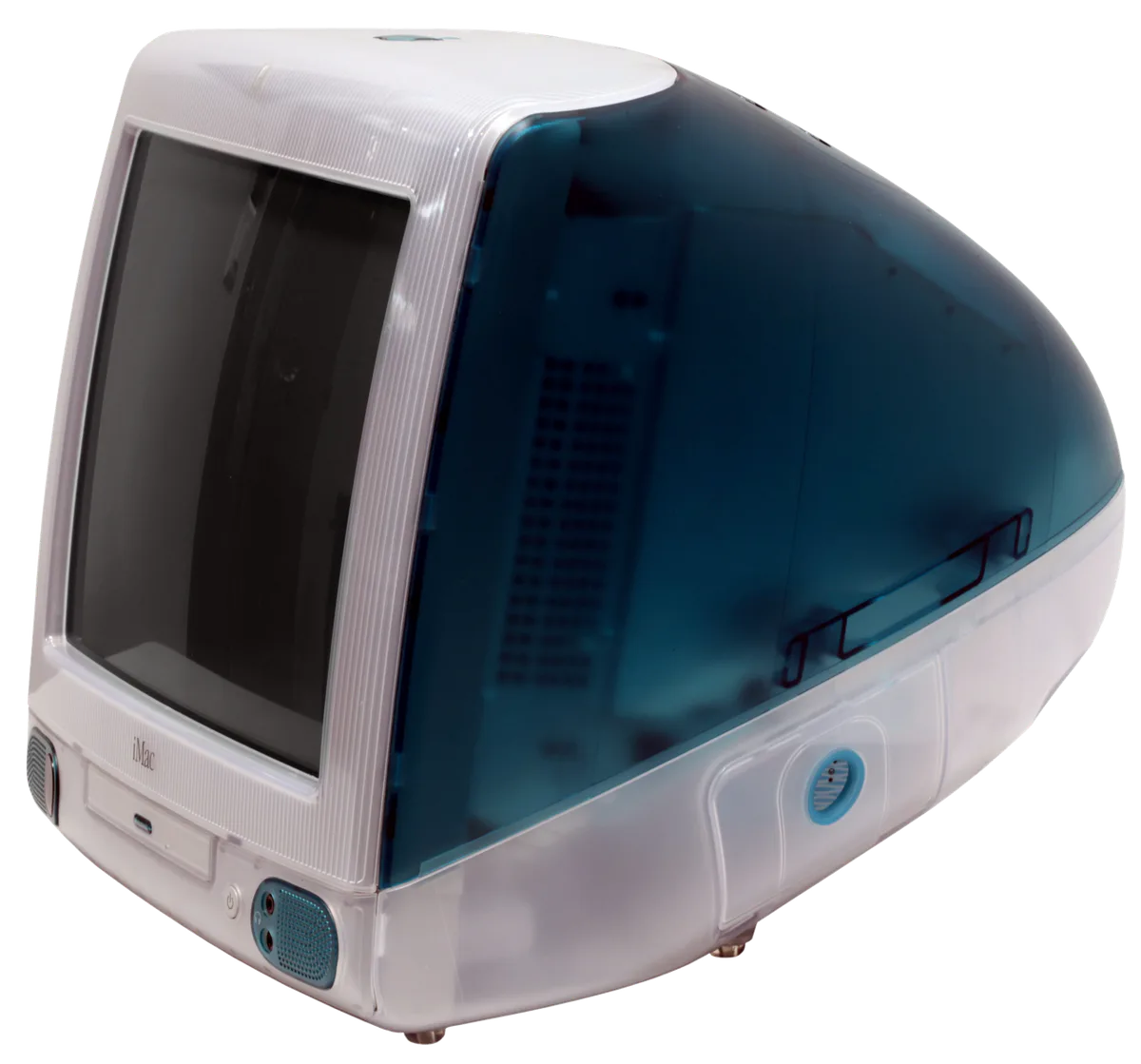
iMac G3 was released on 15 August 1998.
The iMac G3, originally released as the iMac, is a series of Macintosh personal computers that Apple Computer sold from 1998 to 2003. The iMac was Apple's first major product release under CEO Steve Jobs following his return to the financially troubled company he co-founded. Jobs reorganized the company and simplified the product line. The iMac was designed as Apple's new consumer desktop product—an inexpensive, consumer-oriented computer that would easily connect to the Internet.
The iMac's all-in-one design is based around a cathode-ray tube display; the G3 processor, components, and connectivity were all included in a single enclosure. Apple's head of design Jony Ive and his team developed a teardrop-shaped, translucent plastic case that was a radical departure from the look of the company's previous computers. The company developed new working methods to finish the computer quickly, and new workflows for designing future products. The iMac eschewed legacy technologies like serial ports and floppy disk drives in favor of CD-ROMs and USB ports.
Critical response to the iMac was mixed; journalists said the machine would be good for new computer users but bemoaned the lack of legacy technology, and said the separate mouse and keyboard were uncomfortable. Despite the reviews, the iMac was an immediate commercial success, becoming Apple's fastest-selling computer. More than six million units were sold in its lifetime.
The original model was revised several times, improving the processor speed, the amount of random-access memory, hard drive space, and other capabilities. The iMac is credited with saving Apple from financial ruin, and for turning personal computers from niche, technical products to mass-consumer fashion. Other computers and consumer products appropriated the translucent plastic look, leading to legal action from Apple. The iMac G3 series was succeeded by the iMac G4, and the iMac G3's position in education markets was replaced by the eMac.