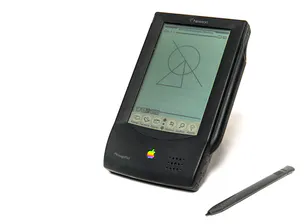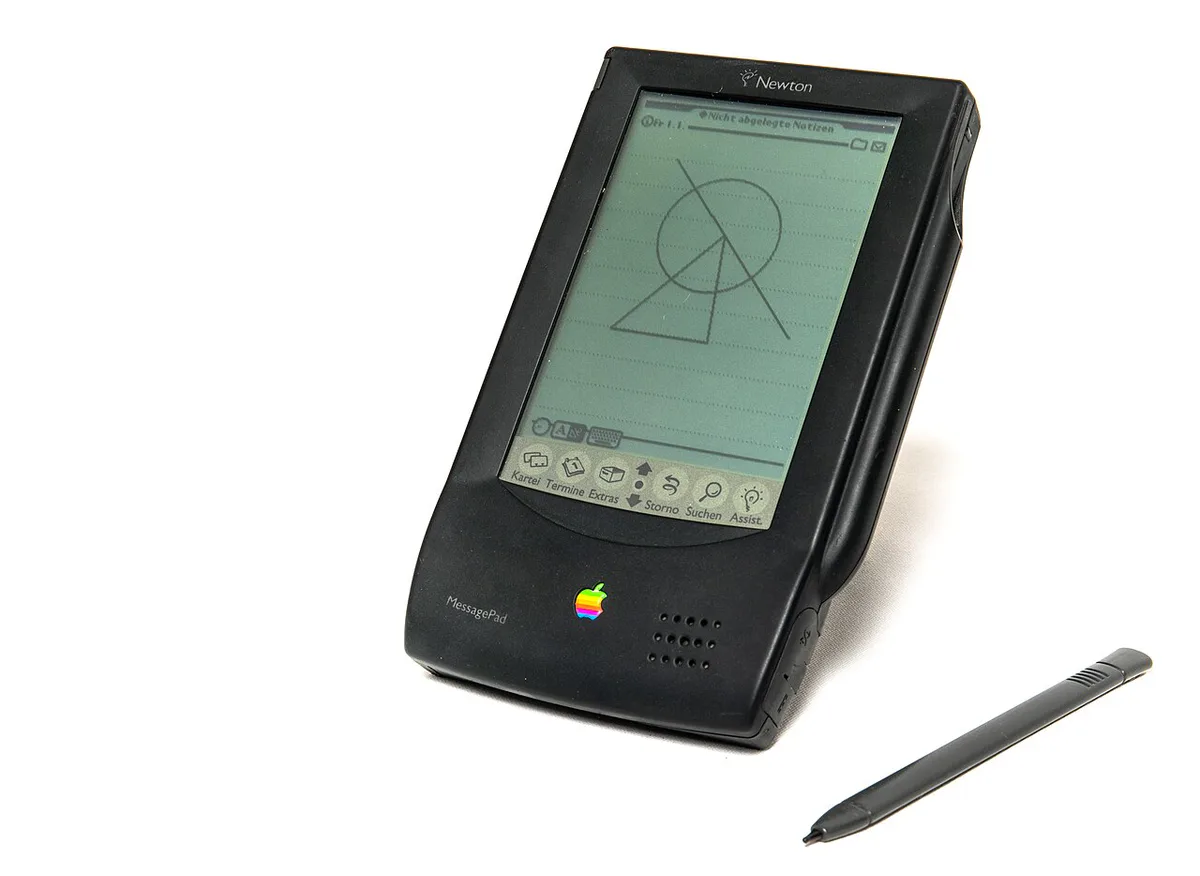
Newton Message Pad
Personal devices · Newton · discontinued 1 March 1994
The Newton is a series of personal digital assistants (PDAs) developed and marketed by Apple Computer, Inc. from 1993 to 1998. An early device in the PDA category – the term itself originating with the Newton – it was the first to feature handwriting recognition. Newton devices run on a proprietary operating system, Newton OS; unlike the company's Macintosh computers, Apple licensed the software to third-parties, who released Newton devices alongside Apple's own MessagePad line.
Apple started developing the platform in 1987; conceptualized by Steve Sakoman as a tablet-like device with handwriting capabilities, he worked with AT&T Corporation to develop a low-power processor, Hobbit, for the project. However, slow progress and other issues led to Sakoman leaving Apple in 1990 to form Be Computer, Inc. The Newton project would be revitalized by Michael Tchao and Steve Capps who pitched the idea directly to CEO John Sculley; Apple invested in Acorn Computers who developed a specific ARM6-based RISC processor for the device. Apple introduced the Newton on May 29, 1992 (1992-05-29), and shipments began on August 2,1993.
Read the full record →