← Back to timeline

· Announcement

Power Macintosh 5300 LC, PowerBook 190, PowerBook 5300 and PowerBook Duo 2300c

Apple announced four products on 28 August 1995: Power Macintosh 5300 LC, PowerBook 190, PowerBook 5300 and PowerBook Duo 2300c.

It was the 9th of 9 dated moments the archive holds for 1995, 21 days after the previous one, 7 August 1995.

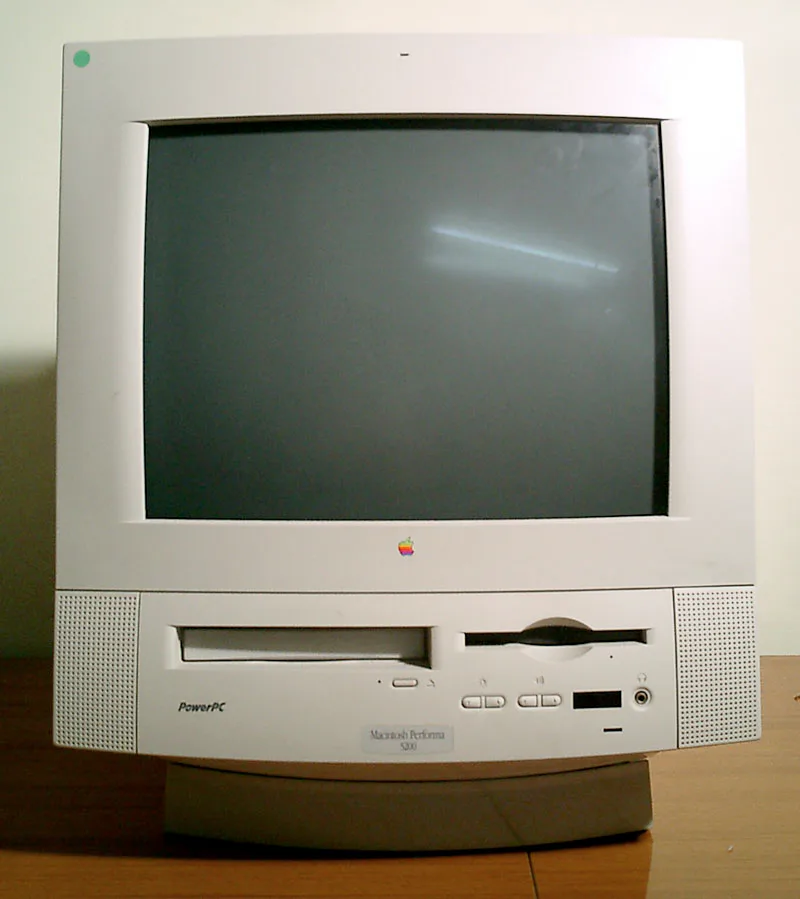
Power Macintosh 5300 LC product photograph

CC BY-SA 3.0

What Apple announced

Power Macintosh 5300 LC

Mac · Power Macintosh · discontinued 1 March 1997

The Power Macintosh 5200 LC and Power Macintosh 5300 LC are a line of personal computers that were a part of Apple Computer's Power Macintosh, LC, and Performa families of Macintosh computers. It was mainly sold in the North American education market. When it was sold to the consumer market, they were marketed as the Performa 5200 and Performa 5300.

The Power Macintosh 5200 LC was introduced in April 1995 with a PowerPC 603 CPU at 75 MHz as a PowerPC-based replacement of the Macintosh LC 500 series. Later models switched to the PowerPC 603e CPU and used model numbers above 5300, but kept the same motherboard design. Unlike previous education models, which prepended the model number with "LC", the 5200 / 5300 models use the Power Macintosh designation of Apple's main workstation line of the time, with "LC" appended to the end.

Read the full record →
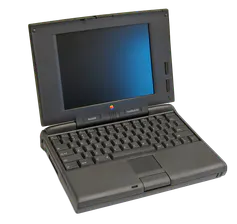
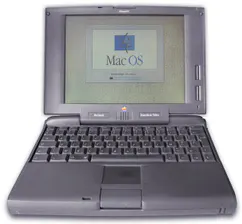
PowerBook 190

Mac · PowerBook 100 · discontinued 1 September 1996

The PowerBook 190 and PowerBook 190cs are laptop computers manufactured by Apple Computer as part of its PowerBook series. Introduced in August 1995, the two models differ primarily in their displays: the 190 has a 9.5-inch (240 mm) greyscale passive-matrix LCD, while the 190cs has a 10.4-inch (260 mm) dual-scan color LCD.

The PowerBook 190 was positioned as an entry-level machine below the subcompact PowerBook Duo 2300 and high-end PowerBook 5300 and was intended for users who did not require the performance of Apple's PowerPC-based PowerBooks. Contemporary reviews described it as a budget-oriented portable computer suitable for tasks such as word processing, Internet access, and general productivity.

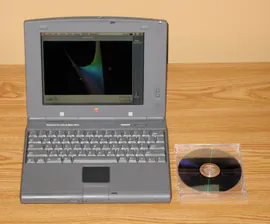
PowerBook 5300

Mac · PowerBook 500 · discontinued 1 September 1996

The PowerBook 5300 is a series of PowerBook laptop computers manufactured by Apple Computer and released in August 1995. Before launch, it was highly anticipated as the first laptop to use the PowerPC processor. The series also introduced features including hot-swappable expansion modules, PC Card slots, and an infrared communication port. It was positioned as the company's high-end laptop, above the entry-level PowerBook 190 and the subcompact PowerBook Duo 2300.

The computers retained several ports used on earlier Macintosh portable models, including SCSI, serial, and ADB ports. An internal expansion slot supported modules such as Ethernet adapters and video cards for connecting a second display in mirrored or dual-screen configurations. A hot-swappable drive bay supported removable modules, although its size limited compatibility with some devices, including internal CD-ROM drives.

Read the full record →

PowerBook Duo 2300c

Mac · PowerBook Duo · discontinued 1 February 1997

The PowerBook Duo is a line of subnotebook computers introduced by Apple Computer in 1992 and sold until 1997. Designed as a smaller companion to the PowerBook 100 series and the later 500 series, the line comprised seven models: the PowerBook Duo 210, 230, 250, 270c, 280, 280c, and 2300c.

Weighing 4.1 pounds (1.9 kg) and measuring 10.9 by 8.5 inches (280 by 220 mm), the PowerBook Duo was the smallest and lightest PowerBook of its time. To achieve its compact size, it omitted many built-in ports and expansion features, instead relying on optional docking stations to provide additional connectivity and functionality.

Read the full record →

Also in 1995

Sources

  1. Power Macintosh 5300 LC · Wikipedia
  2. PowerBook 190 · Wikipedia
  3. PowerBook 5300 · Wikipedia
  4. PowerBook Duo 2300c · Wikipedia

Dates on this page are announcement dates, not shipping dates. Product summaries are drawn from the linked articles, and specification claims in them are the publisher’s, not independent testing. Photograph credits and licences are listed in full on the image credits page.