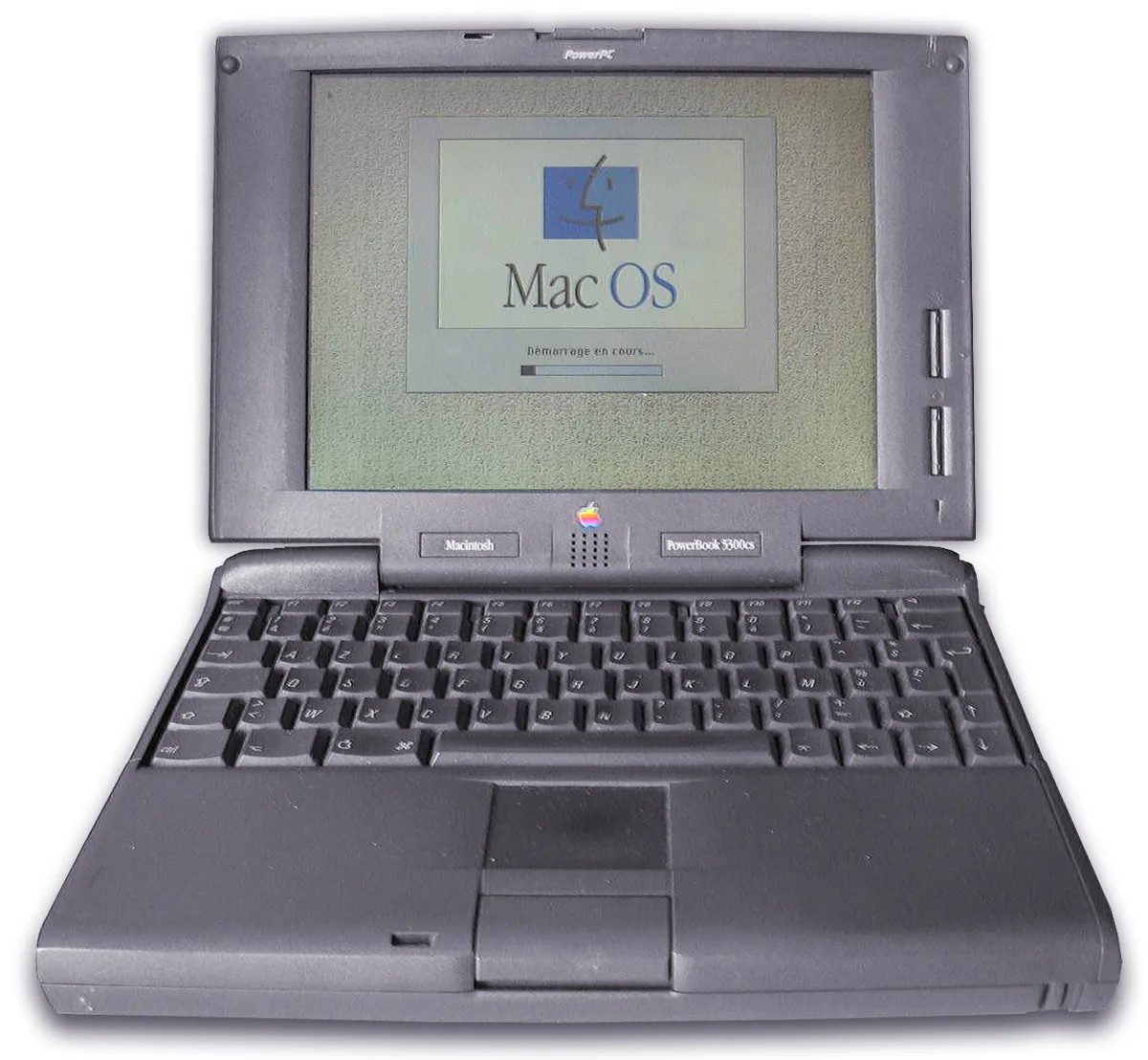
The PowerBook 5300 is a series of PowerBook laptop computers manufactured by Apple Computer and released in August 1995. Before launch, it was highly anticipated as the first laptop to use the PowerPC processor. The series also introduced features including hot-swappable expansion modules, PC Card slots, and an infrared communication port. It was positioned as the company's high-end laptop, above the entry-level PowerBook 190 and the subcompact PowerBook Duo 2300.
The computers retained several ports used on earlier Macintosh portable models, including SCSI, serial, and ADB ports. An internal expansion slot supported modules such as Ethernet adapters and video cards for connecting a second display in mirrored or dual-screen configurations. A hot-swappable drive bay supported removable modules, although its size limited compatibility with some devices, including internal CD-ROM drives.
The 5300 experienced several design and manufacturing problems after release, including structural weaknesses and reliability concerns reported by reviewers and users. Additionally, some early units were recalled after reports of overheating and fire hazards involving their lithium-ion battery packs.
Following the troubled release of the 5300, Apple introduced the PowerBook 1400 in November 1996 after a compressed development schedule enabled by reusing the 5300's architecture in a case designed and manufactured under contract by Quanta Computer. The PowerBook 5300 was discontinued in August 1996 after less than a year on sale. The high-end PowerBook 3400 was released in February 1997 with a full-sized CD-ROM drive bay and higher performance compared with the 5300.